

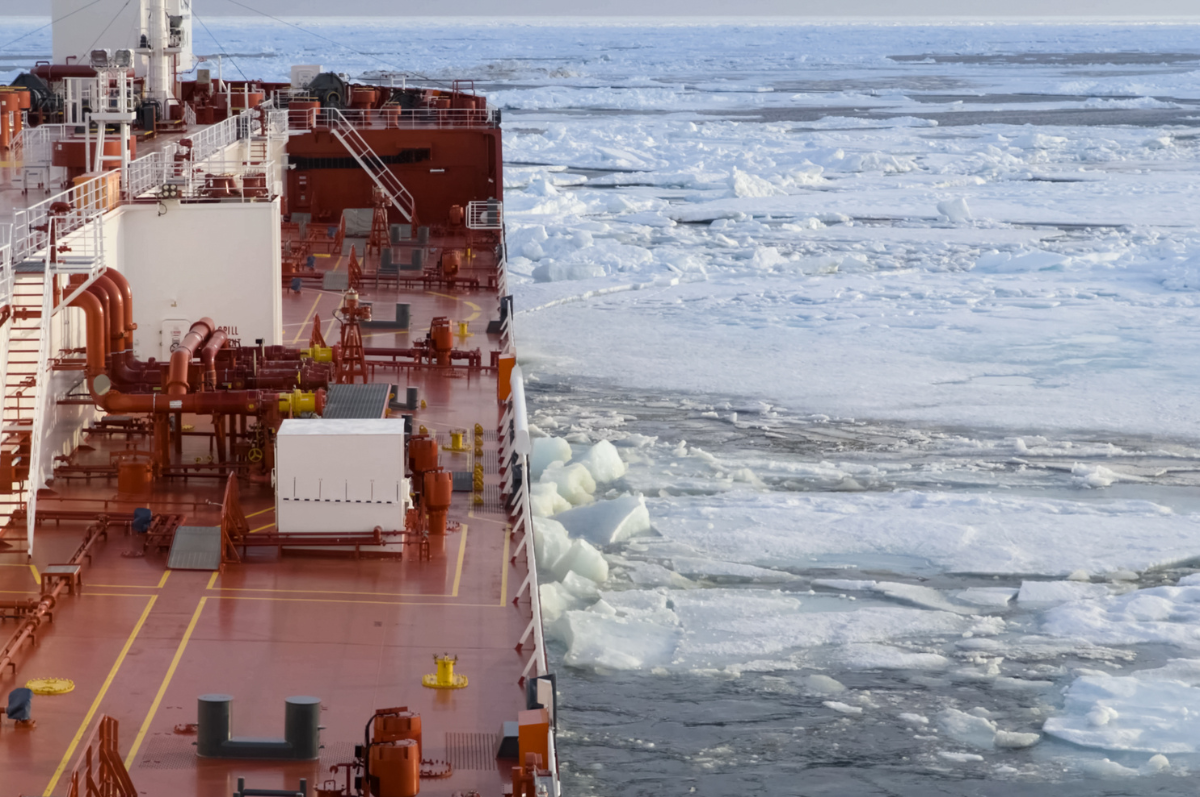
A new seasonal shipping service between China and the UK is bringing Arctic shipping another step closer to becoming a genuine commercial alternative. But what could this mean for global freight, UK importers and exporters, and the future of international supply chains?
The Arctic is becoming an increasingly important part of the global shipping conversation.
In October 2025, we looked at the successful maiden voyage of the Istanbul Bridge, which travelled from China to Felixstowe through the Northern Sea Route. The journey took around 20 days, despite a two-day storm delay, demonstrating the potential for a much faster China–Europe shipping connection.
Now, that potential is beginning to develop into something more significant.
In 2026, Sea Legend has launched a regular seasonal commercial service through the Northern Sea Route, connecting China with Felixstowe. The service is designed to operate during the Arctic navigation season and could reduce China–UK transit times considerably compared with traditional ocean freight routes.
This is more than the launch of another shipping service. It is another sign that global freight networks are becoming increasingly focused on flexibility, resilience and alternative routes.
From a Trial Voyage to a Commercial Shipping Service
The 2025 voyage of the Istanbul Bridge was an important proof of concept.
Travelling from Ningbo-Zhoushan to Felixstowe via the Arctic, the vessel completed the journey in around 20 days. Its cargo included time-sensitive products such as electric vehicles and photovoltaic products, demonstrating the potential value of a faster connection between Asian manufacturers and European markets.
The 2026 development takes this a step further.
Sea Legend’s new service will connect six major Chinese ports with Felixstowe, with cargo consolidated at Ningbo before travelling north through the Northern Sea Route. The planned service is seasonal, reflecting the continuing importance of Arctic weather and sea-ice conditions.
Current reports indicate that the route can reduce the China–Europe journey to around 18 days in favourable circumstances, compared with more than 40 days on traditional Suez routes.
It is important to remember, however, that these figures describe sailing time rather than the complete end to end supply chain. Port handling, customs clearance, inland transportation and other factors will still influence the final delivery time. Nevertheless, the difference is significant.
Why Is the Arctic Route So Much Faster?
The Northern Sea Route follows Russia’s northern coastline, providing a much shorter connection between Asia and Europe than routes travelling south through the Suez Canal or around the Cape of Good Hope.
Traditional shipping routes have faced increasing disruption in recent years.
Geopolitical tensions, congestion, security concerns and disruption around the Red Sea have forced many vessels to take longer routes around the Cape of Good Hope. This has increased sailing distances, fuel consumption, costs and delivery times.
The Arctic offers another option.
A 2026 research study examining China–Europe maritime trade found that the Northeast Passage can significantly reduce voyage distance and navigation time during its operating season. The study also highlighted its potential value as a backup route when conventional corridors are disrupted.
This is perhaps the most important point. The Arctic does not need to replace the Suez Canal to be valuable, it simply needs to provide another viable option.
What Could This Mean for Global Freight?
The emergence of Arctic shipping could have implications well beyond the companies using the route directly.
Greater diversification of shipping routes
For decades, international trade has relied heavily on a relatively small number of major maritime corridors. The Suez Canal is one of the most important, connecting Asia and Europe without requiring vessels to travel around Africa. But recent disruptions have demonstrated the risks associated with relying heavily on major chokepoints.
An additional route gives shipping companies and logistics providers another option when circumstances change. This could make global supply chains more resilient. Rather than depending on a single established route, businesses may increasingly have to consider a combination of traditional and emerging corridors depending on their cargo, destination, timing and risk profile.
Pressure on transit times
Faster shipping creates pressure throughout the freight industry. If businesses become accustomed to significantly shorter transit times for certain China–Europe shipments, traditional services may face increasing demand for faster sailing schedules and more flexible solutions.
For time-sensitive goods, the difference between three weeks and six weeks in transit can be commercially significant.
Changes to inventory planning
Shorter transit times can also change the way businesses manage stock. If products can reach the UK more quickly, companies may be able to reduce the amount of stock they need sitting in transit or adjust their inventory strategies around seasonal demand. This could reduce the amount of working capital tied up in goods travelling between continents.
However, businesses will need to balance these benefits against the seasonal nature of Arctic shipping. A route that is highly attractive during the Arctic navigation season may not provide the same option throughout the rest of the year.
What Does This Mean for UK Importers and Exporters?
For UK businesses importing goods from China, the development could be particularly interesting. A shorter maritime transit time could help businesses that deal with products where speed matters. This could include high-value goods, technology, automotive products, components, renewable energy equipment and other time-sensitive cargo.
Faster transit could help businesses:
- Bring products to market sooner
- Respond more quickly to changes in customer demand
- Reduce the time goods spend in transit
- Improve inventory planning
- Potentially reduce some transport-related costs
- Build additional resilience into their supply chains
But the decision should not simply come down to choosing the fastest route. Businesses will need to consider the entire supply chain.
What happens at the Chinese departure port? How reliable is the sailing schedule? What are the costs of using the service? How will cargo be handled at Felixstowe? What onward transport is required? What happens if weather or ice conditions cause delays?
These questions are particularly important when dealing with a seasonal route.
For UK exporters, the immediate benefits are less direct because the new service is primarily focused on China-to-UK movements. However, the wider development of Arctic shipping could eventually contribute to a broader network of alternative routes between Europe and Asia. As the international shipping landscape changes, UK exporters may benefit from having more options available for future trade.
Felixstowe’s Role in the New Arctic Freight Network
Felixstowe is an important part of this story.
A new international shipping route is only useful if cargo can move efficiently once it reaches its destination. The Port of Felixstowe provides an established gateway into the UK, with connections to road and rail networks that allow containers to continue their journey beyond the port.
For businesses, this highlights an important point: the fastest ocean route is not necessarily the fastest overall supply chain.
The final journey from port to warehouse, distribution centre or customer can have a significant impact on overall delivery times. Effective logistics planning therefore needs to consider the entire movement of goods, not simply the international sailing.
Is Arctic Shipping More Environmentally Friendly?
This is where the picture becomes more complicated.
One of the arguments in favour of the Arctic route is its shorter distance. A shorter voyage can mean less fuel consumption and potentially lower emissions compared with a much longer journey around the Cape of Good Hope. Sea Legend has promoted significant potential emissions reductions from the shorter route. However, it would be misleading to describe Arctic shipping as automatically green.
The Arctic is an extremely sensitive environment. Increased vessel traffic brings risks to marine ecosystems, while accidents and fuel spills can be particularly difficult to manage in remote and challenging conditions. Research into the Northern Sea Route also highlights the importance of factors including sea ice, weather, fuel choice and emerging emissions regulations when comparing its environmental performance with conventional routes.
There is also an uncomfortable reality behind the growing accessibility of the route. The Arctic is becoming easier to navigate partly because climate change is reducing summer sea ice. That makes the commercial opportunity possible, but it is certainly not a simple environmental success story.
The Challenges of Arctic Shipping
The potential is considerable, but Arctic shipping is not without significant limitations.
It remains seasonal
The Northern Sea Route is primarily a summer and autumn shipping corridor. Sea-ice conditions can change quickly, meaning the route cannot currently be treated in the same way as established year-round shipping lanes.
The 2026 Sea Legend service is therefore operating within a defined seasonal window.
Weather and ice remain unpredictable
Even during the navigation season, vessels can encounter difficult conditions.
Rapidly changing weather, sea ice and storms can all affect schedules. The 2025 Istanbul Bridge voyage, for example, experienced a two-day delay because of Storm Amy.
Infrastructure is limited
The Arctic does not have the same level of port infrastructure, rescue capability and support services available along established global shipping corridors. Specialist vessels, navigational support and icebreaker assistance may also be required.
Geopolitical considerations matter
The Northern Sea Route largely runs through waters controlled or administered by Russia. That creates another layer of complexity for international businesses, particularly given the current geopolitical environment and sanctions affecting Russia.
Any company considering an Arctic shipping solution therefore needs to look beyond transit time and freight rates. Political, insurance, operational and compliance risks all need to be considered.
The Future of Global Shipping May Be About Choice
It is unlikely that the Arctic will suddenly replace the Suez Canal or become the default route between China and Europe. For now, it remains a specialist and seasonal option – but that does not make it insignificant.
The biggest change may be the growing number of options available to international supply chains. A 2026 study into Arctic navigation found that the route could provide valuable backup capacity when traditional China–Europe corridors are disrupted, particularly for time-sensitive goods.
This points towards an increasingly flexible approach to international freight. Businesses may not simply ask: “What is the cheapest way to ship this?”
Instead, they may need to consider: “What is the best route for this particular shipment, at this particular time, given the risks involved?”
That could mean choosing between conventional ocean freight, alternative sea routes, rail, air freight or emerging Arctic services depending on the cargo and circumstances.
What Could Happen Next?
The success of the new service will be closely watched by the wider shipping industry.If seasonal Arctic services prove reliable and commercially viable, we could see further investment in suitable vessels, infrastructure and supporting logistics networks.
There is already evidence that interest in the route is growing. Recent research suggests that continued changes in Arctic sea-ice conditions could increase the navigable potential of the Northeast Passage, while also stressing that geopolitical and operational risks need to be considered alongside the benefits.
However, growth is unlikely to happen overnight.
The Arctic remains a challenging environment, and its seasonal nature means it is likely to complement rather than replace established shipping corridors for the foreseeable future. The more realistic future may therefore be a multi-route global freight network, where businesses have greater flexibility to switch between corridors when circumstances demand it.
The Hawley Logistics Advantage
For businesses, keeping track of these developments can be difficult. New shipping routes, changing schedules, geopolitical risks, environmental regulations and fluctuations in freight costs can all affect the best way to move goods.
At Hawley Logistics, we understand that effective freight planning is about much more than simply moving a container from one port to another. It is about understanding the wider picture.
Whether you are importing goods into the UK, exporting products overseas or looking for ways to make your supply chain more resilient, we can help you assess the available options and plan your freight around your business requirements.
Emerging routes such as the Northern Sea Route demonstrate just how quickly the global shipping landscape can change. The businesses best placed to benefit are likely to be those that understand their options and are prepared to adapt. Contact us today to see how we can help to streamline your freight and shipping processes.
Looking Ahead
The Arctic shipping route is still in its early stages. It has a short operating season, significant environmental considerations and complex geopolitical and operational challenges. It is not a replacement for established shipping routes. But the move from a single experimental voyage in 2025 to a regular seasonal commercial service in 2026 is an important development.
It shows that Arctic shipping is no longer simply a theoretical alternative. For global freight, it represents another potential route. For UK importers, it could provide a faster option for certain China-sourced goods.
And for the wider logistics industry, it is another reminder that the future of international trade will depend on flexibility, resilience and the ability to adapt when traditional routes become more challenging.
At Hawley Logistics, we keep a close eye on these developments so our customers can make informed decisions about their supply chains.
The shipping map is changing. The businesses that understand those changes will be best placed to navigate them.


