

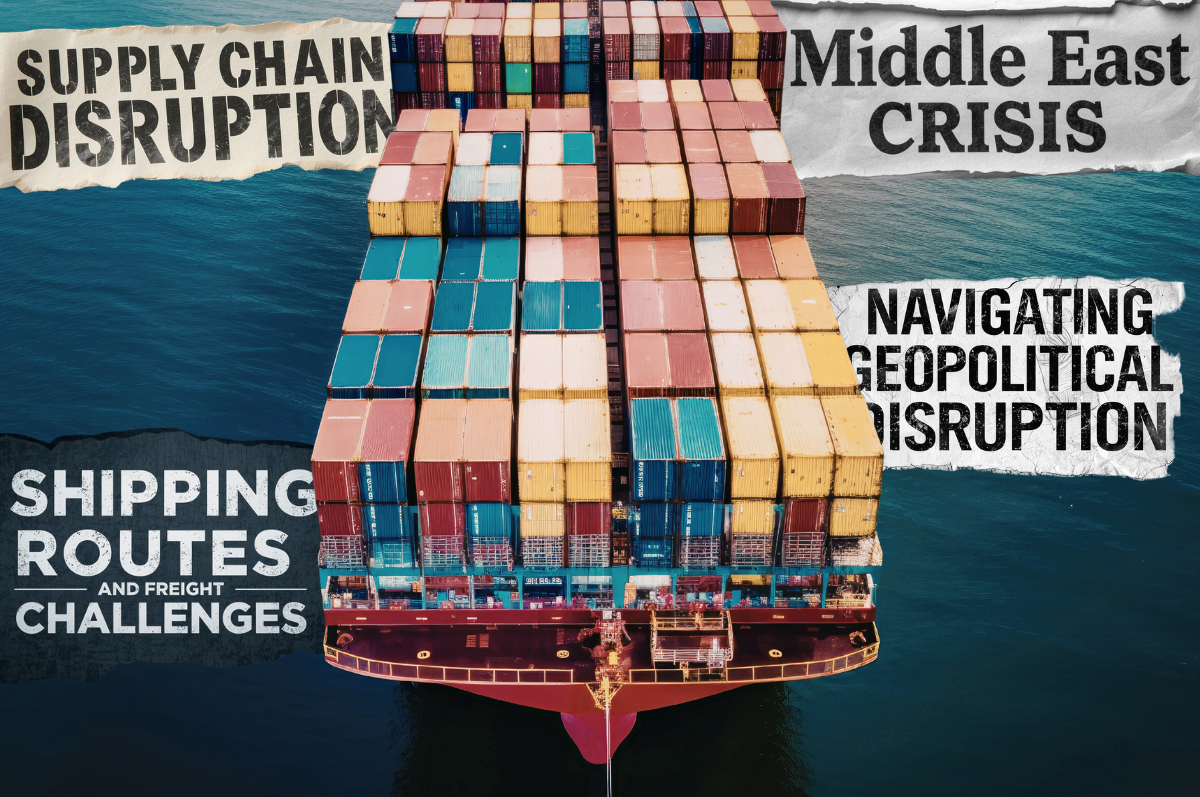
Global supply chains are once again feeling the pressure from geopolitical instability in the Middle East. What began with intermittent shipping disruptions in the Red Sea and attacks on commercial vessels has evolved into a broader challenge affecting routes from the Suez Canal to the Strait of Hormuz. The impact is being felt across ocean, air, and land transportation and nowhere is this more acute than for UK‑based importers and exporters.
In the face of this uncertainty, Hawley Logistics remains focused on helping businesses adapt, stay resilient, and find workable logistics solutions in an unpredictable environment.
Safety and Stability in a Shifting Landscape
The human dimensions of this conflict extend far beyond cargo flows. Seafarers, logistics personnel, and communities near conflict zones continue to live and work under shifting conditions. The wellbeing and safety is everyones top priority.
Across the industry, operators are adjusting networks and operations in real time, balancing commercial requirements with crew safety and route security. Recent moves by carriers to suspend or reroute services reflect this ongoing concern.
UK Supply Chains Under Pressure: Freight Costs, Delays, and Diversions
Shipping Routes and Transit Challenges
The Red Sea and the Suez Canal are critical passageways for UK maritime trade, particularly with Asian and Gulf markets. In 2024, instability in the region caused major carriers to reroute vessels around the Cape of Good Hope, adding thousands of nautical miles and weeks of extra transit time to major shipping routes.
According to the UK’s Office for National Statistics, container traffic through the Suez Canal fell sharply in 2024 as UK imports and exports were redirected, with container ships increasingly transiting via longer alternate routes.
Cost Pressures on UK Businesses
UK firms have reported significant freight cost inflation tied to these diversions. Surveys show
- 55% of UK exporters and over half of manufacturing and retail firms have seen supply chain disruption, including rising costs and delays.
- Some businesses cited container hire and freight costs surging by up to 300% on certain routes.
Longer voyages also drive fuel consumption higher and add additional charges such as emergency surcharges and risk premiums – all of which flow through to shippers and, ultimately, UK business costs.
Impact on UK Importers and Exporters
Manufacturing and Retail Supply Chains
Extended transit times are creating bottlenecks for UK industry sectors that rely on lean supply chains:
- Manufacturers experience delayed components and raw materials, forcing inventory stock‑downs or costly alternative sourcing.
- Retailers and wholesalers report delays of up to three to four weeks on goods passing through disrupted maritime routes, squeezing lead times and forecasting.
- Cost inflation – from container costs to insurance increases is filtering through to pricing structures for UK imports and exports.
Although broader UK freight volumes continue to show growth in container tonnage through major ports, these figures mask uneven pressure points in specific corridors exposed to the Suez/Red Sea dynamics.
What History Tells Us: Lessons from Past Disruptions
Previous episodes, such as the 2021 Suez Canal blockage, highlighted how quickly a critical chokepoint’s disruption can ripple through global logistics – leading to carrier schedule reshuffles, port congestion, and rate volatility that persisted long after the immediate issue was cleared.
Similarly, earlier Red Sea challenges in 2023–2024 demonstrated that longer routing around Africa can temporarily restore flow, but at the cost of time and money – and these effects can linger as businesses recalibrate contracts, capacity planning, and inventory strategies.
Future Outlook: What’s Next for UK Trade?
Scenario 1: Prolonged Disruption
If geopolitical tensions persist or expand to adjacent strategic passages – such as the Strait of Hormuz – UK supply chains may face sustained cost and timing impacts. Rising insurance premiums for high‑risk routes are already being reported, which could further push freight rates upwards.
Scenario 2: Gradual Route Normalisation
Recent moves by carriers to cautiously resume some Red Sea transits hint at a partial normalisation. Still, traffic remains substantially below historic levels, and carriers are balancing safety with economics.
Either way, the trajectory suggests that logistics strategies will need to factor in longer planning windows, dual‑sourcing approaches, and flexible routing options as part of standard operating procedures.
Practical Guidance for UK Businesses
Hawley Logistics recommends a proactive, layered strategy:
Diversify routing and carriers – don’t rely on a single shipping corridor.
Extend planning horizons – build buffer time into production and delivery schedules.
Monitor freight cost forecasts and surcharges – understand how bunker, insurance, and risk premiums affect total landed costs.
Leverage multi‑modal options – air freight, rail, and road may offer strategic alternatives for priority shipments.
Partner early with logistics experts – early engagement improves response time and flexibility when disruption hits.
Conclusion: Staying Agile in an Unstable World
Geopolitical shocks remind us that global logistics are as much about politics and security as they are about infrastructure and capacity. For UK importers and exporters, the current situation presents both immediate challenges – increased costs and longer transit times and a call to build more resilient supply chains.
At Hawley Logistics, we work closely with businesses to navigate these complex landscapes, offering tailored freight solutions that balance reliability, cost‑effectiveness, and flexibility no matter where your goods are headed.


